


When choosing industrial silicone components for electronics, automotive sealing, household appliances, and medical supporting equipment, most buyers only focus on surface parameters such as size, hardness, and price. Few people realize that invisible quality defects, unstable material performance, and mismatched customization standards will cause long-term equipment failure, frequent maintenance costs, and shortened service life of finished products. Selecting reliable custom silicone rubber products is not just a simple procurement behavior, but a key decision that directly affects production stability, safety compliance and overall project profitability.
Many factories encounter repeated leakage, aging cracking, yellow discoloration and poor bonding after mass use of silicone accessories. These problems rarely appear in simple sample tests, but are fully exposed in high-temperature, humid, long-term friction and outdoor harsh environments. The root cause lies in unqualified raw silicone rubber formula, rough mold processing accuracy, incomplete vulcanization process and lack of strict post-processing inspection. Ordinary suppliers cannot control the whole production chain, so they can only deliver finished products blindly, leaving huge hidden dangers for downstream users.
Professional silicone product manufacturers master full-process material matching, mold opening customization, precision molding and environmental performance testing. Wanzheng Gifts adheres to food-grade, environmentally friendly and industrial-grade dual-standard production specifications, strictly screens raw silicone materials, optimizes compression deformation resistance, weather resistance and insulation performance, and avoids common after-sales troubles that plague most purchasers. Unlike low-cost rough products, customized silicone parts with standardized production can adapt to extreme working conditions without performance attenuation.
Long-term low-cost silicone parts seem to save upfront procurement expenses, but actually increase comprehensive costs greatly. Sealing failure leads to equipment downtime, abnormal circuit short circuit causes safety accidents, and discoloration and odor affect product qualification rate in food and medical scenarios. Replacing accessories repeatedly also consumes a lot of labor hours and logistics costs. Practical industry experience shows that high-precision customized silicone components can reduce the overall operation cost by more than 40% throughout the service cycle.
Most buyers misunderstand silicone product standards, equating all soft rubber parts with the same usability. In fact, silicone materials are divided into food grade, medical grade, ordinary industrial grade, high temperature resistant grade, insulation grade and wear-resistant grade. Different application scenarios correspond to completely different formula ratios, production processes and detection indicators. Blind matching will directly lead to product incompatibility, safety non-compliance and rapid performance degradation, which is the core deep-seated problem ignored by most procurement personnel.
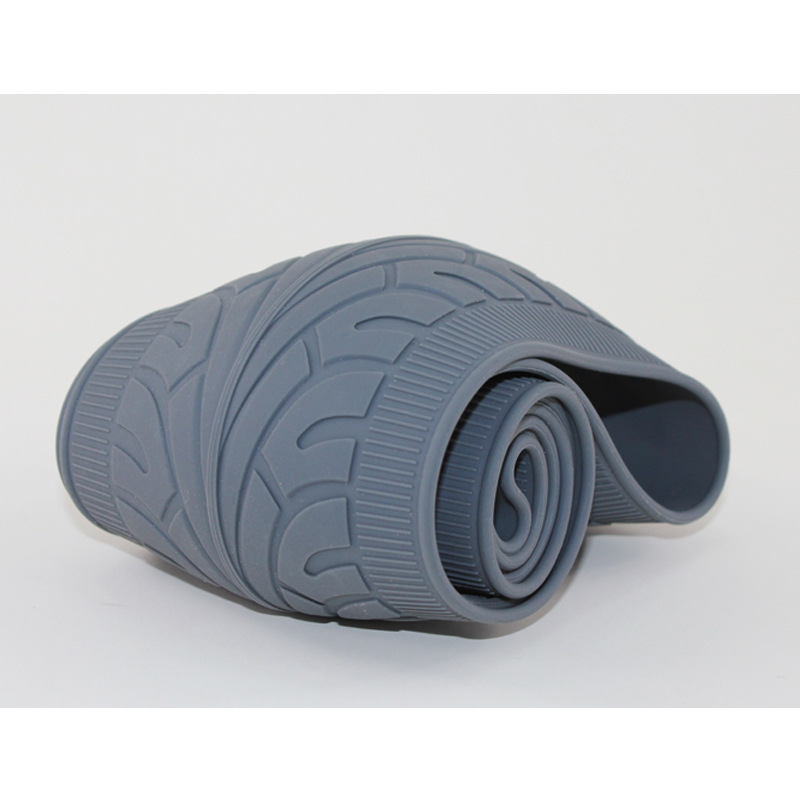
Core Performance Comparison Table Of Conventional Silicone Parts & Premium Custom Silicone Components
| Performance Indicator | Ordinary Low-Quality Silicone Parts | High-Precision Custom Silicone Rubber Parts |
|---|---|---|
| High Temperature Resistance Range | -20℃ ~ 120℃ | -40℃ ~ 230℃ |
| Compression Permanent Deformation Rate | >25% after long-term use | ≤8% under continuous high temperature |
| Anti-Aging & UV Resistance | Obvious cracking & yellowing within 6 months | Stable performance for 5+ years outdoors |
| Dimensional Accuracy Error | ±0.3mm~±0.8mm | ±0.05mm ultra-precision tolerance |
| Odor & Hazardous Substances | Contains residual volatile impurities | Zero heavy metal, food contact safe standard |
| Mold Customization Cycle | 7~15 working days | 3~7 rapid precision mold opening |
| Applicable scenarios directly determine whether silicone parts can play a stable role. Household electronic seals require low odor and insulation; automotive shock absorption and sealing parts need excellent compression resilience; food contact accessories must meet national food safety testing; outdoor waterproof parts demand strong weather resistance and oxidation resistance. Irregular customized silicone products cannot meet multi-scenario strict requirements, and are easy to cause matching failure with supporting parts. |
Mold precision is another easily overlooked key factor. Silicone molding relies on precision steel mold processing. Rough molds will cause burrs, uneven surface, irregular edge size and poor assembly fit. High-precision molds ensure smooth surface, tight fitting and no gap leakage, greatly improving assembly efficiency of finished products. Mass mass production also maintains consistent size and performance without large differences between batches.
Full-process quality inspection determines the actual service life of silicone products. Qualified silicone accessories undergo hardness testing, tensile strength testing, high and low temperature aging testing, waterproof airtight testing and environmental protection composition testing. Each batch of finished products is inspected before delivery to avoid defective products flowing into the production line, which protects normal operation of customer assembly and finished product delivery.
In actual industrial production and daily product supporting applications, reasonable selection of customized silicone parts can avoid most unnecessary faults and maintenance losses. Choosing standardized, full-process customized silicone rubber accessories with stable material formula, precise molding technology and complete testing system is the most cost-effective and safe procurement scheme for long-term stable production.